
FLYWHEEL BALANCING MACHINES
Applications
FAST, HIGH-DEFINITION FLYWHEEL BALANCING
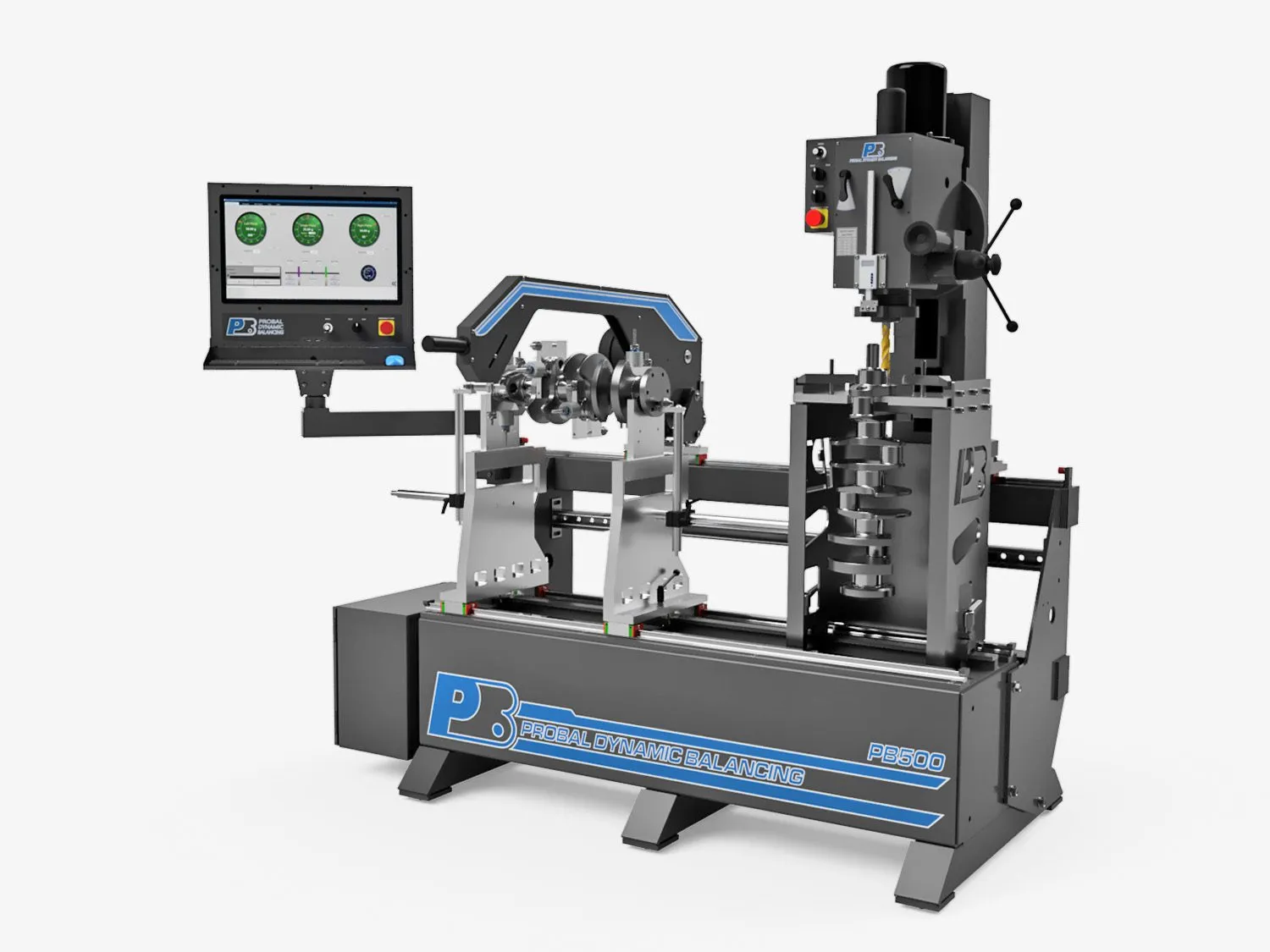
ProBal flywheel balancing machines deliver fast, high-definition single-plane data for automotive and industrial flywheels. Our vertical balancers use fast-reading sensors and proven software to measure and correct flywheel imbalance quickly and accurately.
WHY BALANCE A FLYWHEEL
A flywheel stores rotational energy and smooths engine operation. An unbalanced flywheel transmits vibration through the drivetrain, accelerates bearing and clutch wear, and reduces engine smoothness. Balancing corrects the mass distribution so the flywheel rotates true.
For the full explanation of how flywheel balancing works, dynamic vs static methods, and when vertical or horizontal machines fit, read our overview: automotive flywheel balancing machines, an overview of its importance and functionality.
HOW PROBAL BALANCES FLYWHEELS
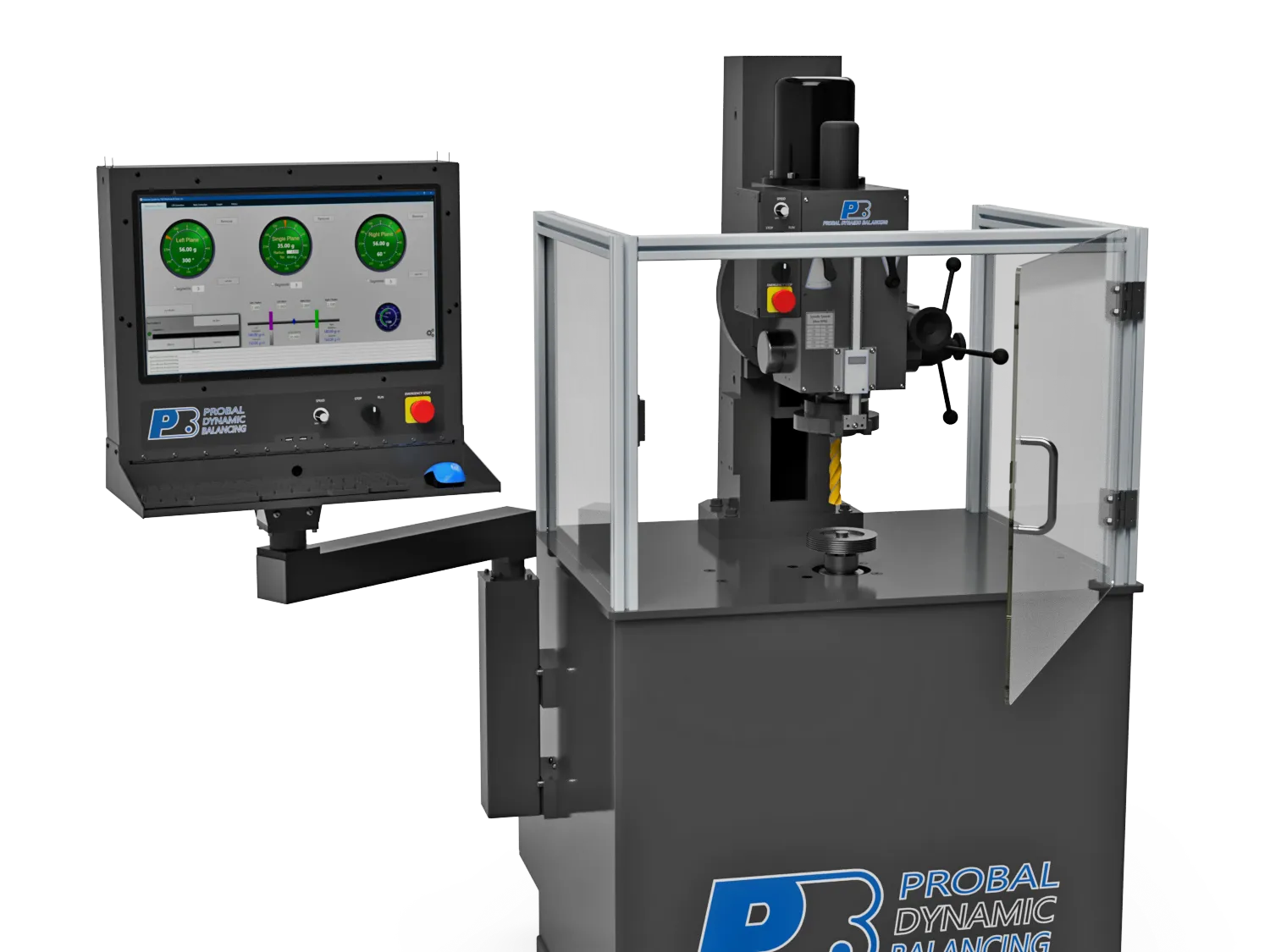
Flywheels are typically single-plane parts balanced on vertical balancing machines. ProBal vertical balancers pair fast-reading sensors and high-definition single-plane data with hard-bearing support, permanent calibration, and touchscreen ProBal DBS software, so measurement cycles stay fast and corrections land exactly where the software calls for them. Drill-press correction options handle material removal on the machine.
Balancing automotive flywheels alongside engine work? The same shops usually balance crankshafts too; see crankshaft balancing and the Edge Mill Mount System, the mill-mounted engine-balancing option that covers crankshafts and flywheels without a standalone balancer.
OTHER APPLICATIONS
REQUEST FLYWHEEL BALANCING PRICING
Automotive or industrial flywheels, single parts or production volume, tell us what you balance and we will spec the right machine.